

Ecosystem Models Collective
A Growing Catalog of Ecosystem Building Models & Frameworks
Introducing the Ecosystem Models Collective — a collaborative project stewarded by the ESHIP Alliance, the Global Entrepreneurship Network (GEN) and IU Innovates to advance the practice of entrepreneurial ecosystem building.
Through this project, we are collecting and curating some of the most insightful, practical, and battle-tested ways people think about how entrepreneurial ecosystems are formed, supported, and sustained. The collection spans research-informed frameworks and on-the-ground practitioner models — all rooted in real-world experience.
Why This Matters
The field of entrepreneurial ecosystem building continues to grapple with a lack of shared language and alignment around core concepts. That fragmentation makes it harder to explain what ecosystem building is, how it works, and how practitioners should approach their roles.
The Ecosystem Models Collective aims to help by fostering conversation and shared understanding that can:
• Clarify the structure and dynamics of entrepreneurial ecosystems
• Guide how ecosystem builders design and prioritize their work
• Build greater field-wide alignment around how ecosystems function and evolve
By bringing together diverse, practitioner-tested and research-backed models, this project is designed to spark productive dialogue — helping the field refine its collective understanding and move toward greater coherence.
Phase I: Starting the conversation
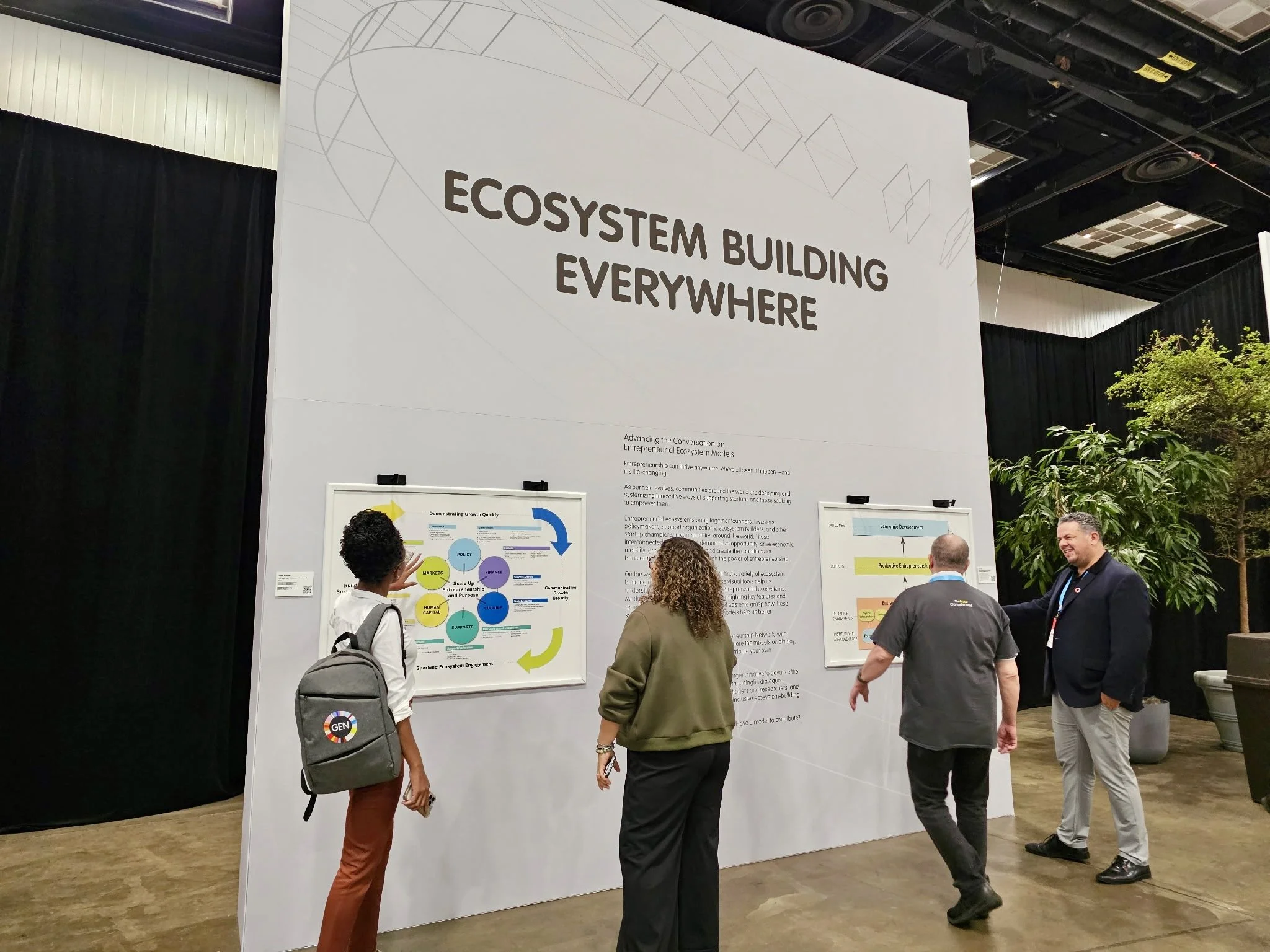
We officially kicked off the project at the Global Entrepreneurship Congress 2025 in Indianapolis, Indiana, with an interactive, gallery-style “art” exhibit. The exhibit featured an initial (and intentionally incomplete) set of frequently cited ecosystem models and frameworks, creating space for conversation, reflection, and feedback.
The initial collection included models developed by:
Brad Feld — The Boulder Thesis (2012)
Victor Hwang & Greg Horowitt — The Rainforest (2012)
Daniel Isenberg — Scale-Up Ecosystem Framework
Kauffman Foundation — Seven Design Principles for Building Entrepreneurial Ecosystems (2017)
Norris Krueger — Ecosystem Building Framework
Andrea Mazariegos — Ecosystem Development Model (2024)
MIT REAP — Innovation Ecosystem Framework
Erik Stam — Entrepreneurial Ecosystem Elements Framework (2017)
WayBuilders — WayWorks Ecosystem Model and Framework (2025)
Explore the initial models in the gallery below, or head over to the ESHIP Commons to share your reflections and comments. The ESHIP Commons is a digital community for entrepreneurial ecosystem builders and those who support the field — there is no cost to join the community and it is open to all.
Join The Conversation and Share Your Models
We’re actively building the next phase of this project — and we want to include more perspectives, approaches, and voices.
Whether you’re a seasoned practitioner, a researcher, or an emerging leader in the field, if you have a model or framework that has proven useful in practice, we’d love to see it. Share your work below and help shape the growing collective understanding of how entrepreneurial ecosystems are built.
Browse summaries of the models in our collection below, then head over to the ESHIP Commons to explore them in community, join the conversation, and submit your own models and frameworks.
The Ecosystem Building Everywhere art installation showcased nine initial ecosystem models and frameworks in the Main Hall of the Global Entrepreneurship Congress (GEC 2025), held in June 2025 in Indianapolis, Indiana.
The installation was co-produced by the ESHIP Alliance, the Global Entrepreneurship Network (GEN), and Indiana University (IU Innovates and the Herron School of Art + Design).
If you’d like more information about the Ecosystem Models Collective, contact project lead Cecilia Wessinger at models-collective@eship.org. She’s happy to answer questions, share more about the project’s goals, or explore ways to get involve.
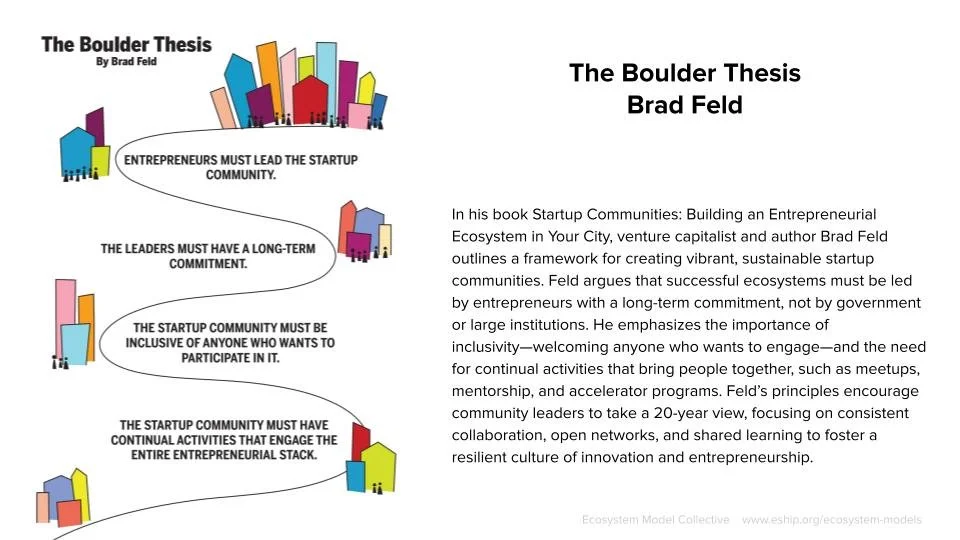
Framework/Model by Brad Feld
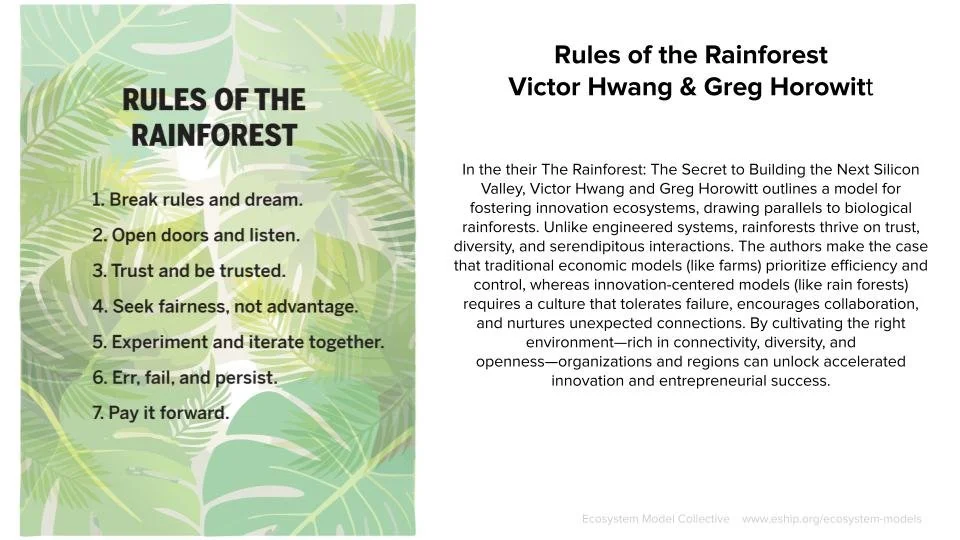
Framework/Model by Victor Hwang and Greg Horowitt
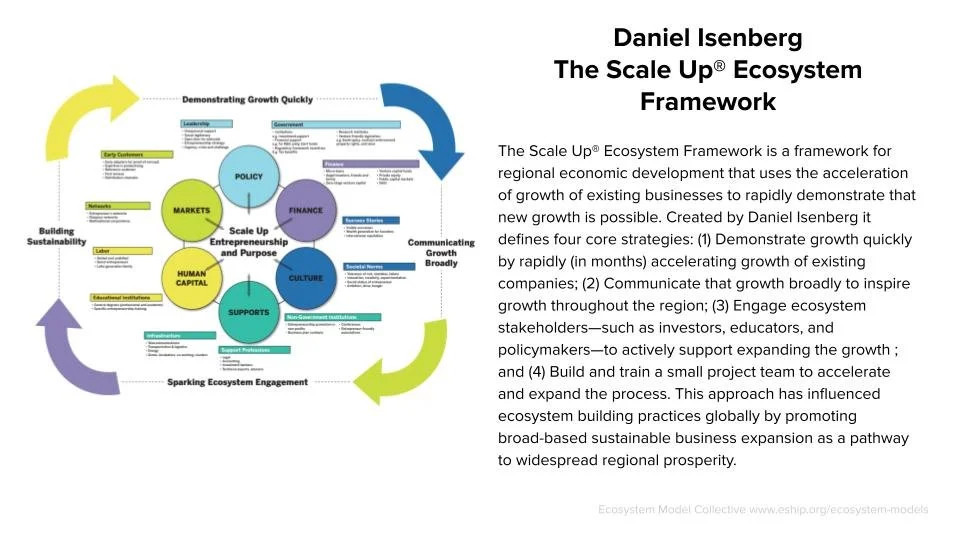
Framework/Model by Daniel Isenberg
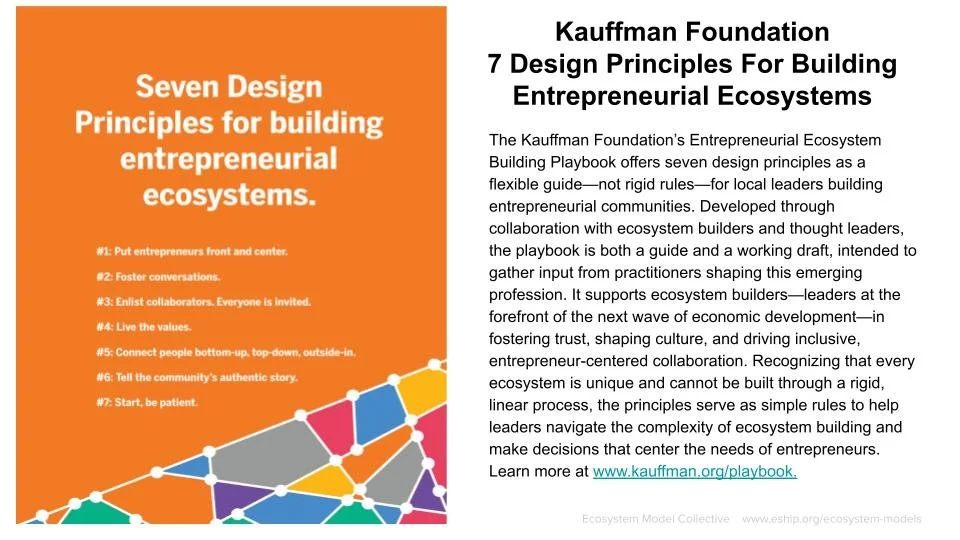
Framework/Model by the Ewing Marion Kauffman Foundation
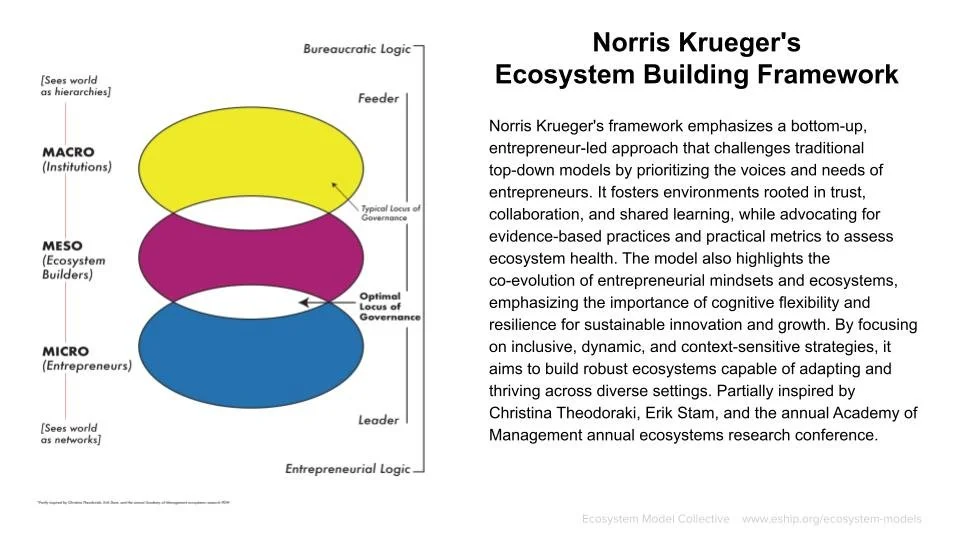
Framework/Model by Norris Krueger
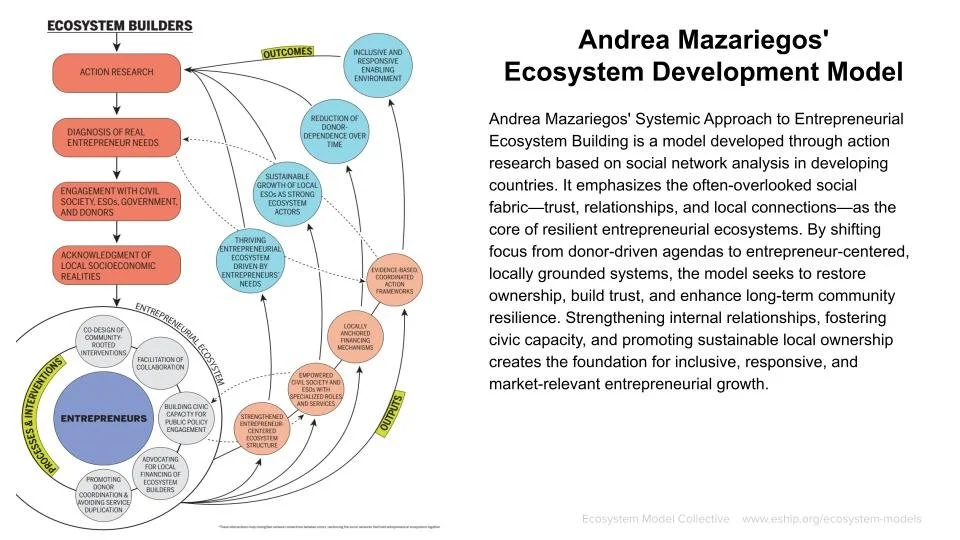
Framework/Model by Andrea Mazariegos
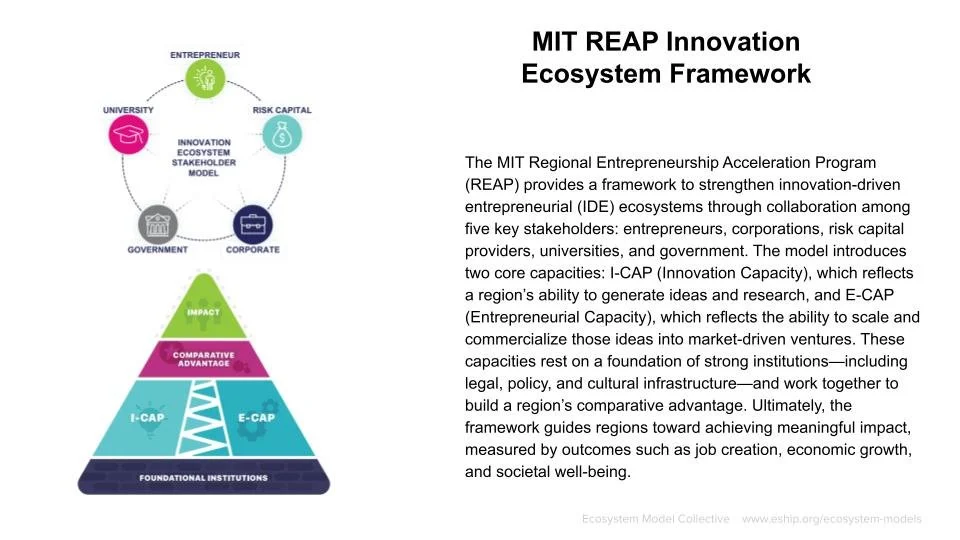
Framework/Model by MIT REAP
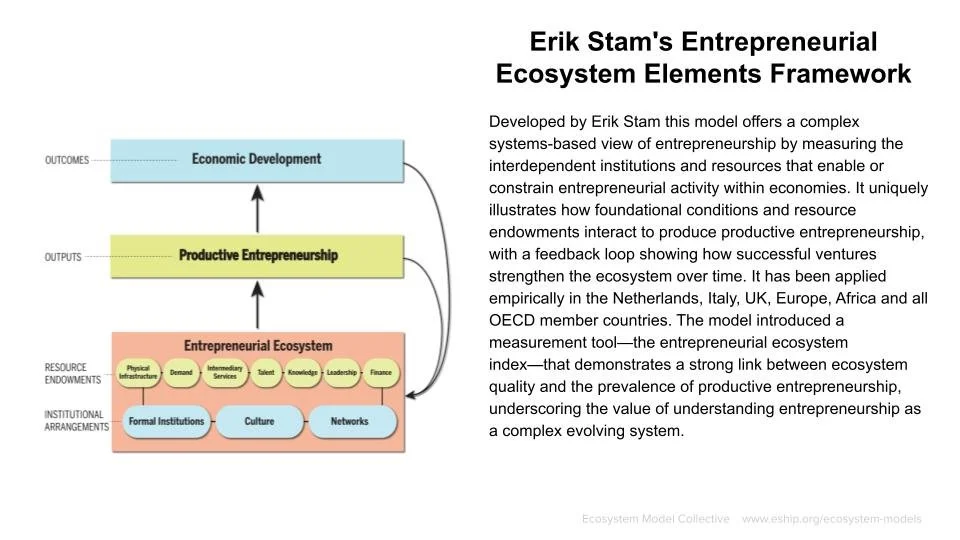
Framework/Model by Erik Stam
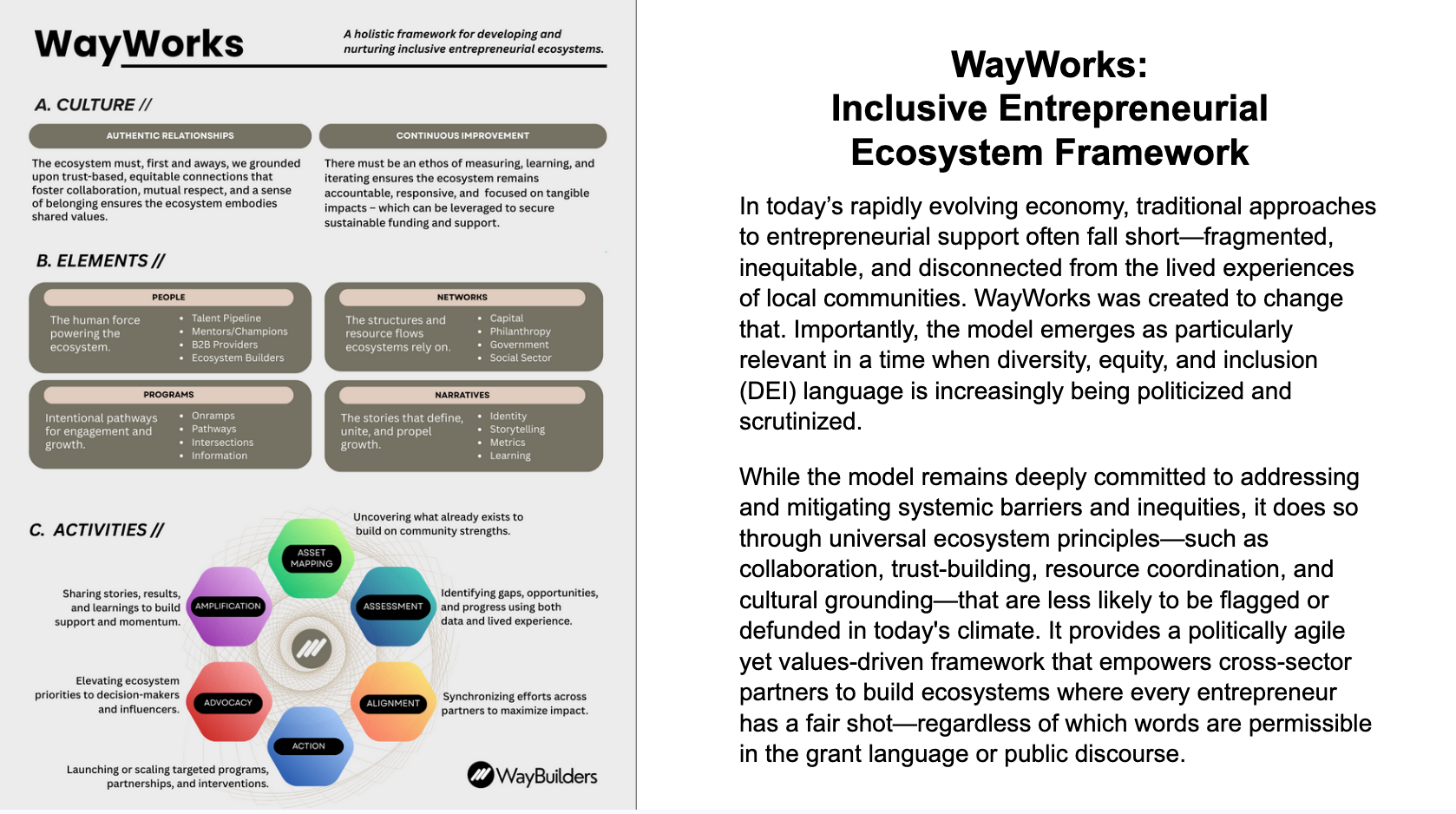
WayWorks Model by WayBuilders